About This Course
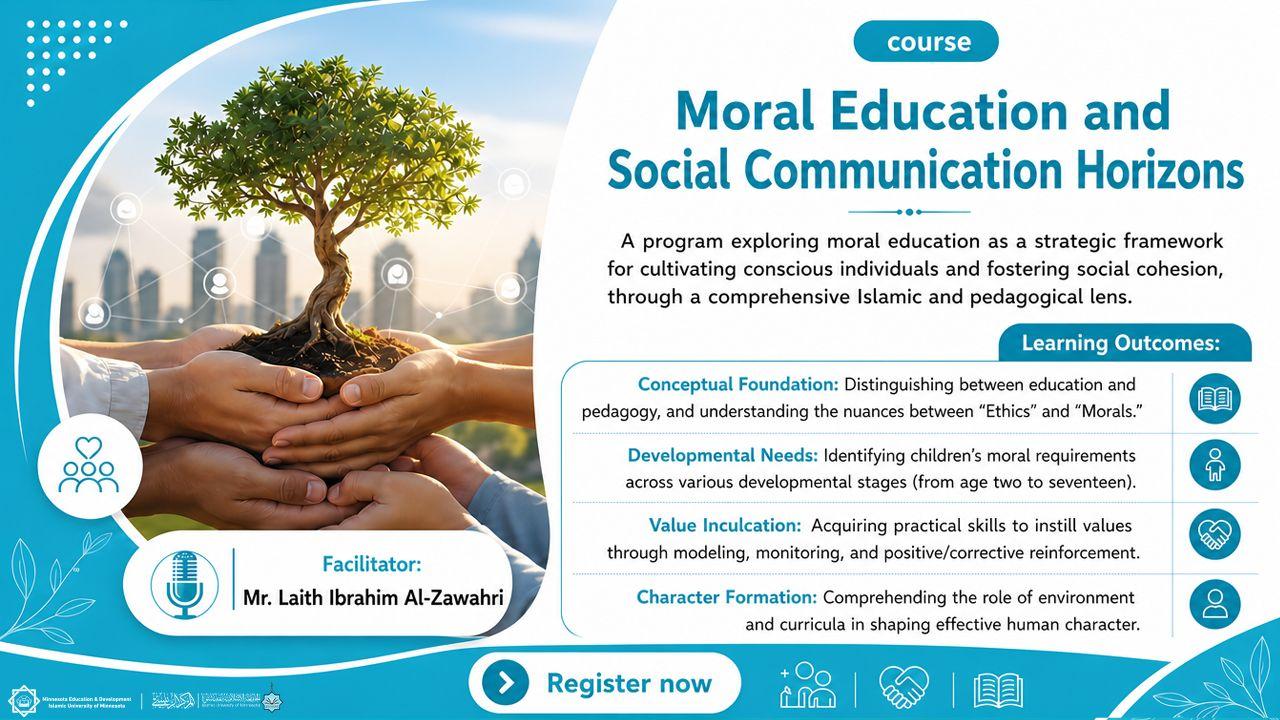
The course provides an in-depth analysis of what moral education is and the essential differences between it and traditional education, illustrating how education shapes a blend that reflects a person's character and defines their traits. The course material covers the stages of moral development from early childhood to late adolescence, highlighting how environment, heredity, and positive role models influence the formation of virtues. Additionally, the course lays out a practical roadmap for promoting values through nurturing institutions such as family and school, as well as the role of media and the legal system in protecting social behavior.
Learning outcomes
- A clear understanding of the differences between education and teaching, and between the terms ethics and morals.
- The ability to identify the child's ethical needs based on their developmental stages from the age of two to seventeen.
- Acquiring practical skills to instill values through means of role modeling, observation, encouragement, and deterrence.
- Understanding the role of the surrounding environment and curriculum in shaping an active human personality.
Course Requirements
- Familiarity with basic educational concepts and interest in the field of upbringing.
- Desire to develop behavioral interaction skills with various age groups.
- Openness to understanding values and ethics from a philosophical and Islamic perspective.
Course Curriculum
-
Definition of Education in Language and Terminology
-
Inclusive Education
-
The Difference Between Education and Learning and Their Importance in Shaping the Individual
-
The Nature of Ethics and the Difference Between It, Values, and Behavioral Rules
-
Value Classifications
-
Aspects of Moral Development
-
First: The Family Environment
-
Second: School Environment
-
The Role of Media and the Legal System and How We Acquire Ethics
-
The Test
Reviews Statistics
Loading reviews...