

About This Course
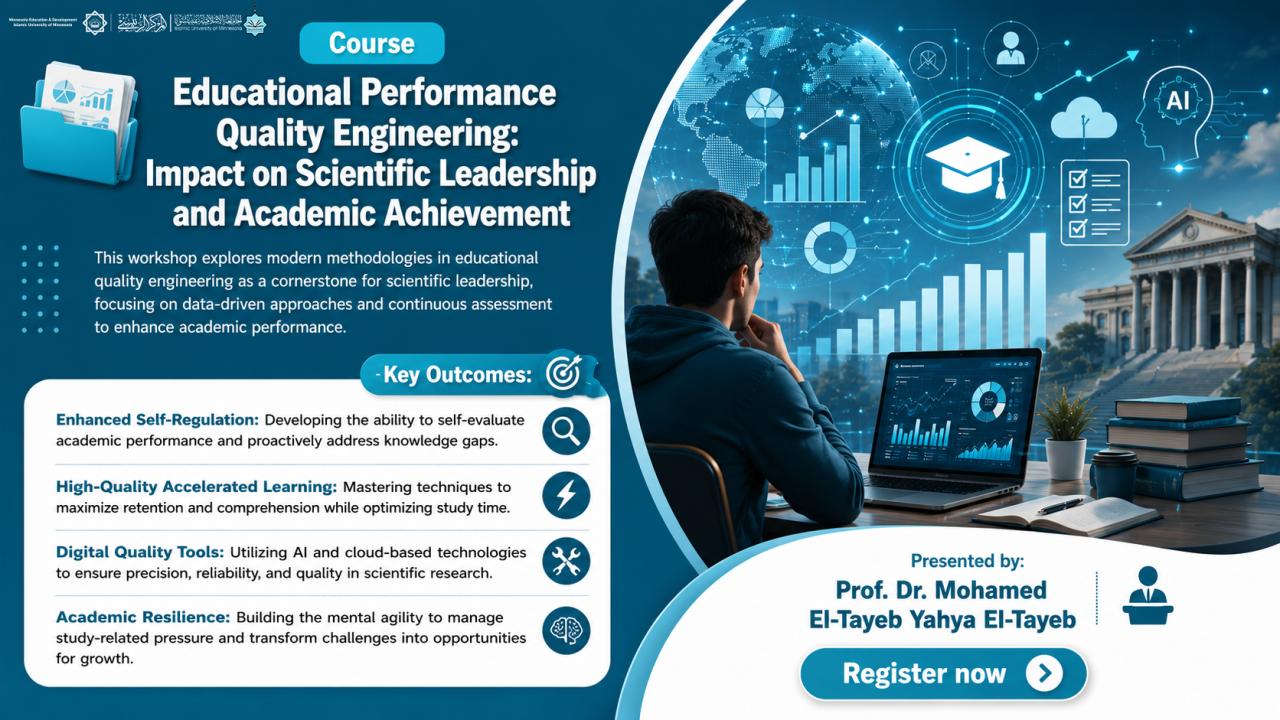
This is not just a course about "quality" as a dry managerial concept, but a journey to transform the student's mindset from "traditional learning" to "professional mastery." The course aims to empower both students and university professors with total quality tools and apply them to their academic pathways, maximizing the benefit from available resources (time, effort, technology) and achieving educational outcomes that meet the standards of a competitive job market.
Learning outcomes
- Enhancing self-regulation: the ability to self-evaluate academic performance and identify knowledge gaps, addressing them before exams.
- Acquiring the skill of "high-quality accelerated learning", which aims to reduce study hours while increasing comprehension and retention of information.
- Mastering digital quality tools: being able to use artificial intelligence techniques and cloud applications to enhance the quality of scientific research and ensure its accuracy and reliability.
- Academic flexibility: building mental resilience that empowers students to effectively manage study pressures and turn challenges into opportunities for improvement and development.
Course Requirements
- Mental readiness: Growth mindset: a genuine desire to transition from the square of "studying for grades" to the square of "studying for mastery". Cognitive openness: willingness to critique traditional study habits and adopt "Kaizen" strategies.
- Availability of an organized paper planner to document personal quality maps. Standard attendance: commitment to attending all training hours, as each module builds on the previous one in a geometric sequence.
- Choosing a "challenge model": each student or instructor should select one subject or current research project to serve as the "application lab" for quality standards throughout the duration of the course.
- Basic knowledge of digital research fundamentals, with a desire to learn how to use artificial intelligence tools for academic output quality.
Course Curriculum
-
The Concept of Performance Quality Engineering and Its Importance for the Continuity of Organizations
-
Quality Triangle: Leadership, Management, and Governance
-
Islamic Principles: Mastery and Quality
-
The Five Areas of Academic Accreditation
-
The Role of the Self-Assessment Team in Identifying Strengths and Weaknesses
-
Quality of Education, Teaching, and Continuous Assessment
-
Characteristics of an Effective and Inspiring Educational Leader
-
Vision and Mission as a Roadmap for the Institution
-
Using Data in Decision Making and Addressing Low Achievement
-
Formulating SMART Goals for Performance Development
-
Setting Success Indicators to Measure the Effectiveness of Plans
-
Test
Reviews Statistics
Loading reviews...