

About This Course
The instructor presents the fundamental differences between descriptive, inferential, and predictive analysis, highlighting the importance of each type in the fields of medicine, marketing, and education. The workshop also focuses on the technical aspect by showcasing leading tools such as Excel, SPSS, and Power BI, while emphasizing the commitment to ethics and professional responsibility in data handling.
Learning outcomes
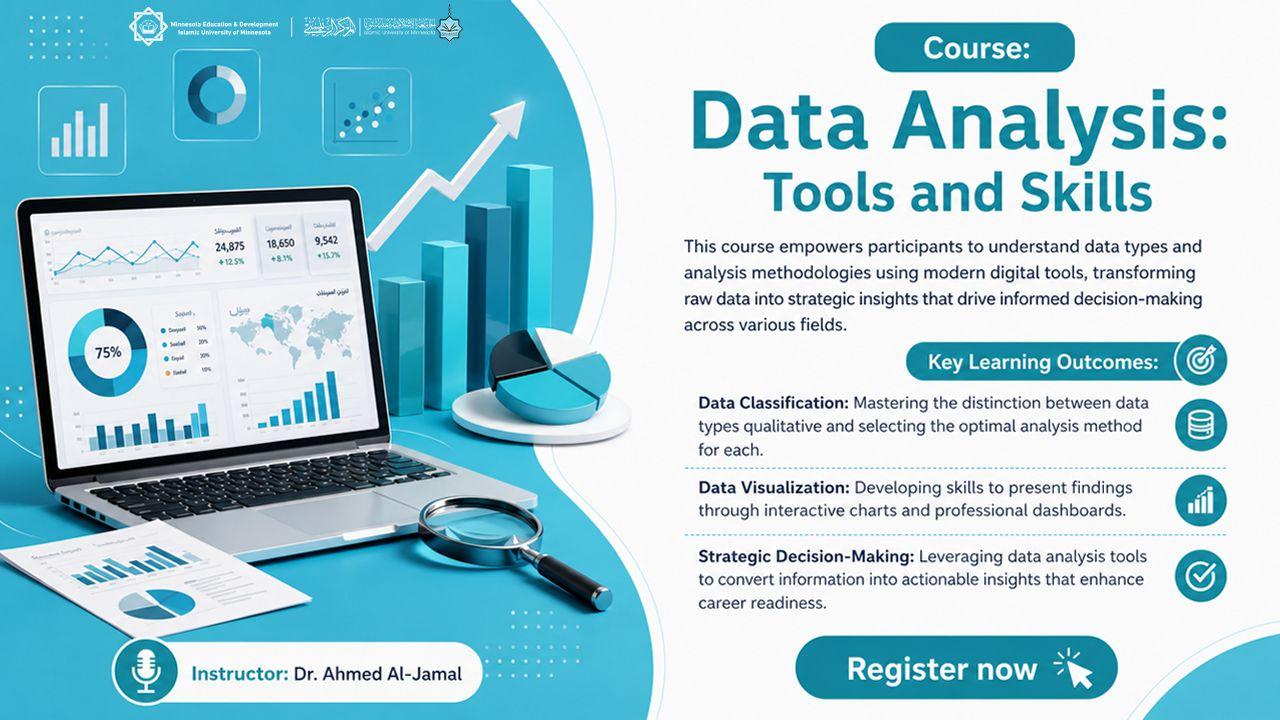
- Distinguishing between types of data (qualitative, quantitative, composite) and selecting the appropriate analysis method for each.
- Skill in presenting results through interactive graphs and dashboards.
- Empowering students with digital data analysis tools to transform information into strategic decisions that enhance their readiness for the job market.
Course Requirements
- Basic familiarity with computer applications (no specific major required).
- Interest in scientific research, management, or data-driven decision-making.
Course Curriculum
-
Introduction to Data Analysis and Standard Classifications
-
Data Lifecycle from Collection to Archiving
-
Software Systems (The Most Important Tools Used in Data Analysis)
-
Levels of Analysis (Descriptive, Inferential, and Predictive)
-
Visual Presentation and Interactive Diagrams
-
Creating KPIs and Analyzing Trends
-
Challenges of Data Analysis and Practical Solutions
-
Data Ethics and Privacy Charter
-
The Test
Reviews Statistics
Loading reviews...