

About This Course
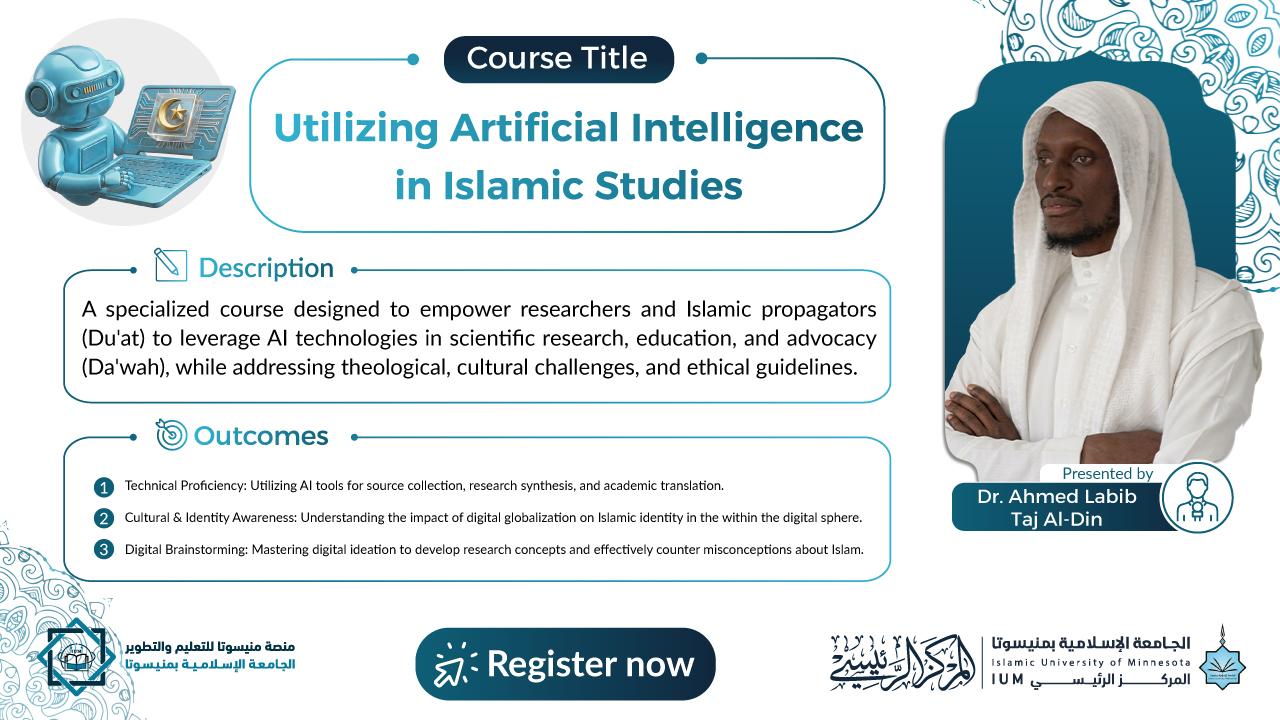
This course aims to introduce specialists in Islamic studies to the concept of artificial intelligence and how it mimics human thinking through big data processing. The course covers practical applications for utilizing digital tools in summarizing research, translating foreign sources, conducting academic brainstorming, and designing visual religious content. It also explores in depth the "Cultural Homogenization Theory" and the impact of Western hegemony on the outputs of artificial intelligence related to Islamic values.
Learning outcomes
- The ability to use AI tools for gathering sources, summarizing research, and scientific translation
- Understanding cultural challenges (globalization theory) and their impact on Islamic identity in the digital space
- Acquiring digital brainstorming skills to develop research ideas and address misconceptions about Islam
Course Requirements
- Basic knowledge of working with computer systems and traditional search engines.
- Fundamental familiarity with the principles of Islamic sciences (Tafsir, Hadith, Fiqh) to understand the language of the Quran and the scientific methodology.
Course Curriculum
-
The Nature of Artificial Intelligence and the Characteristics of Computer Systems (Processing and Learning)
-
Ways to Utilize Artificial Intelligence in the Field of Islamic Studies
-
The Theory of Cultural Globalization and Its Impact on Unifying Tastes (Cultural Homogenization)
-
Challenges of Text Analysis and the Privacy of the Quranic Language
-
The Digital Gap and Addressing Programmed Orientalist Sources
-
Recommendations for Institutions and Individuals on Training, Digitization, and Technical Cooperation
-
Course Test
Reviews Statistics
Loading reviews...